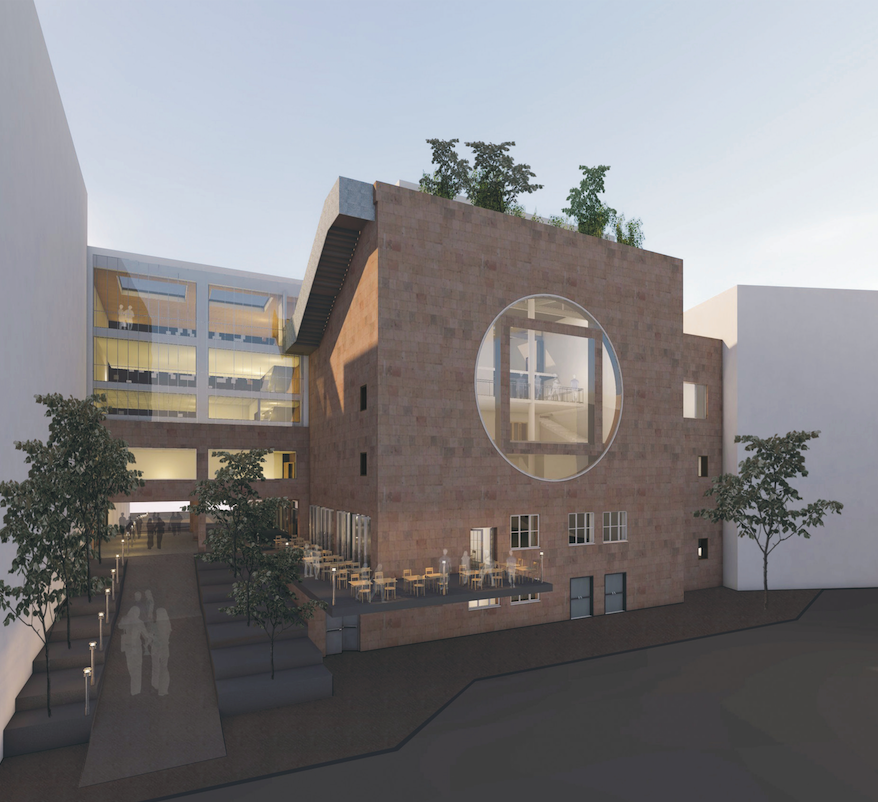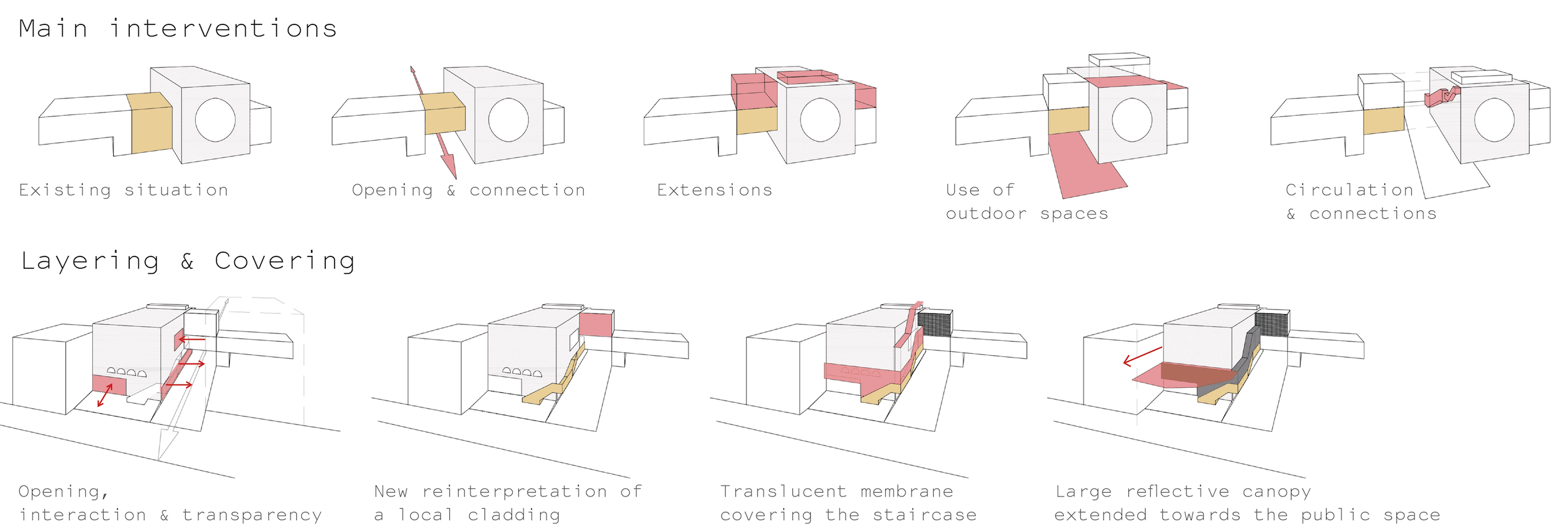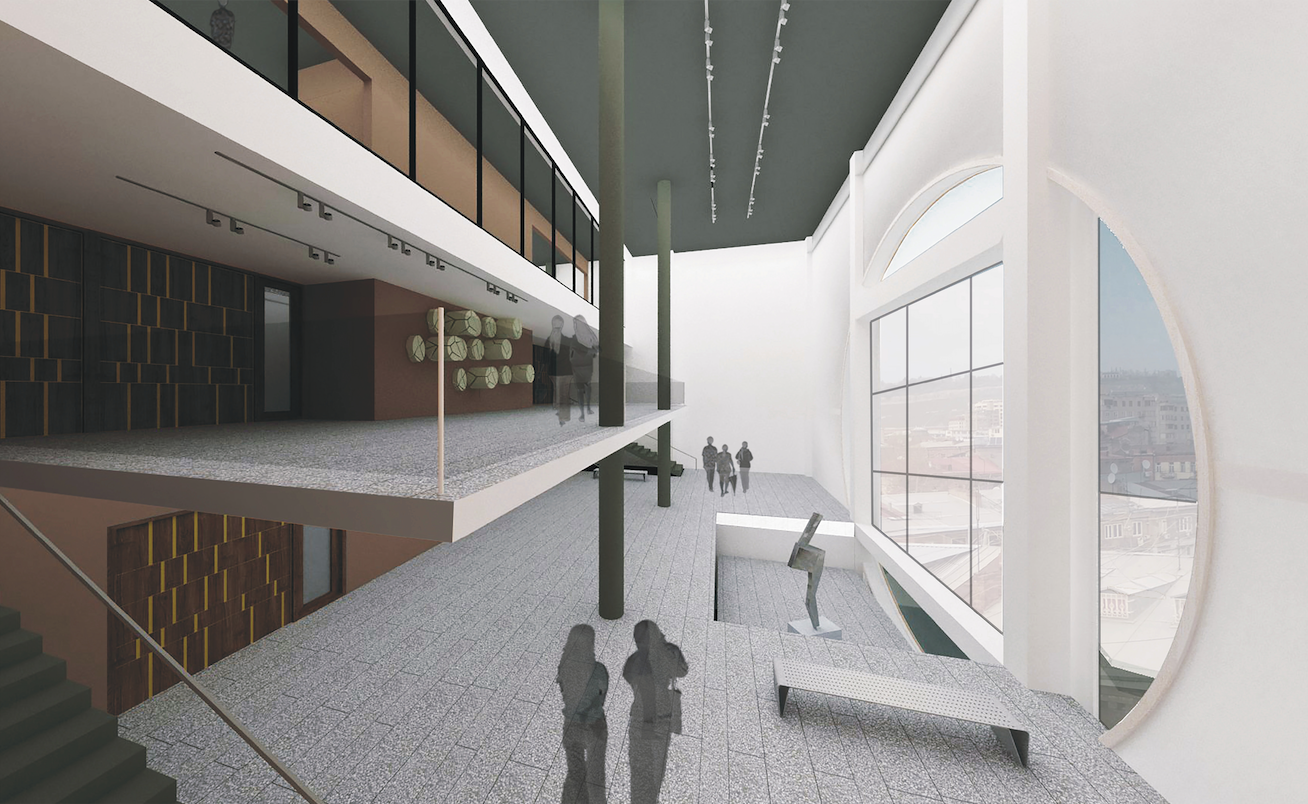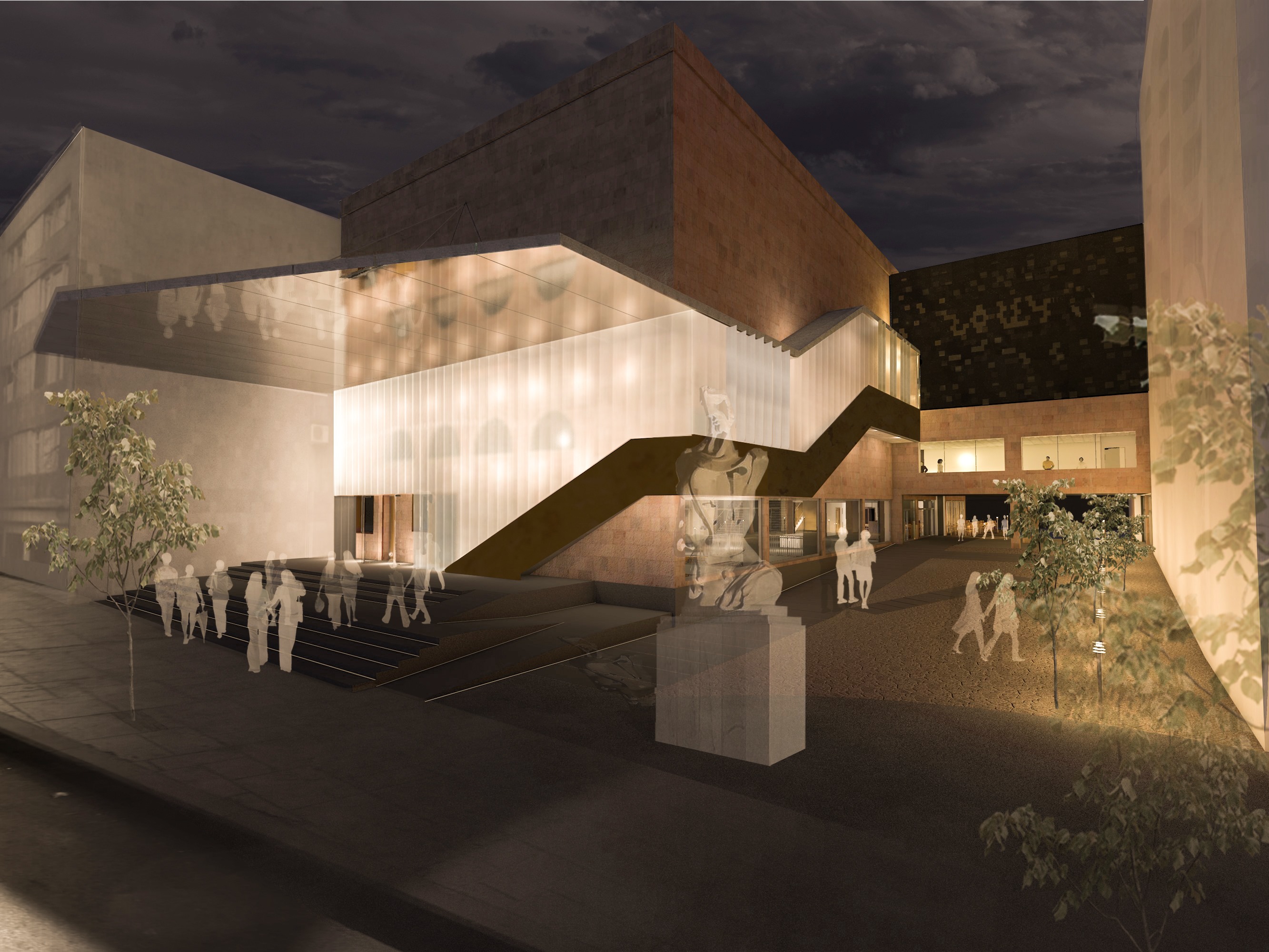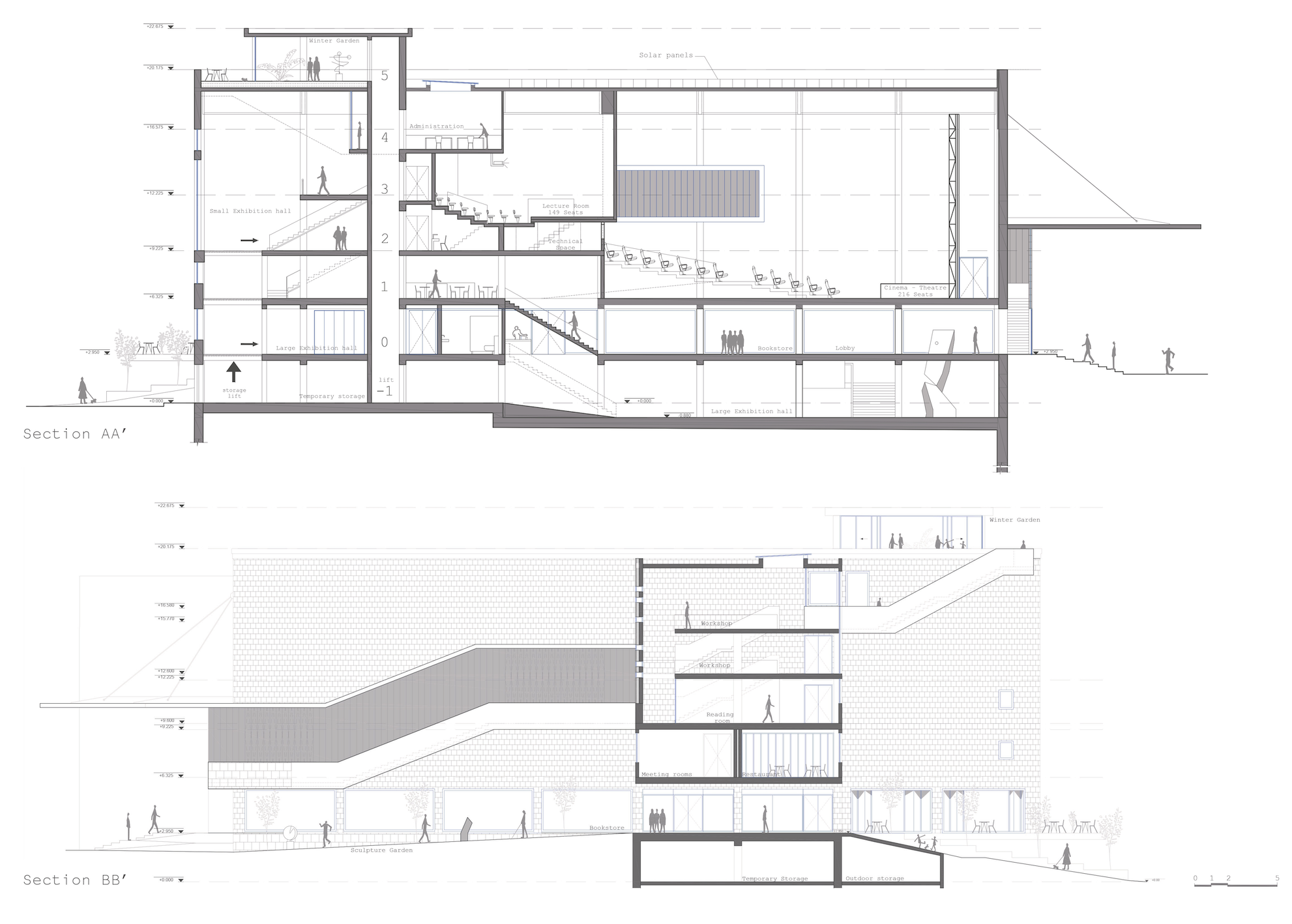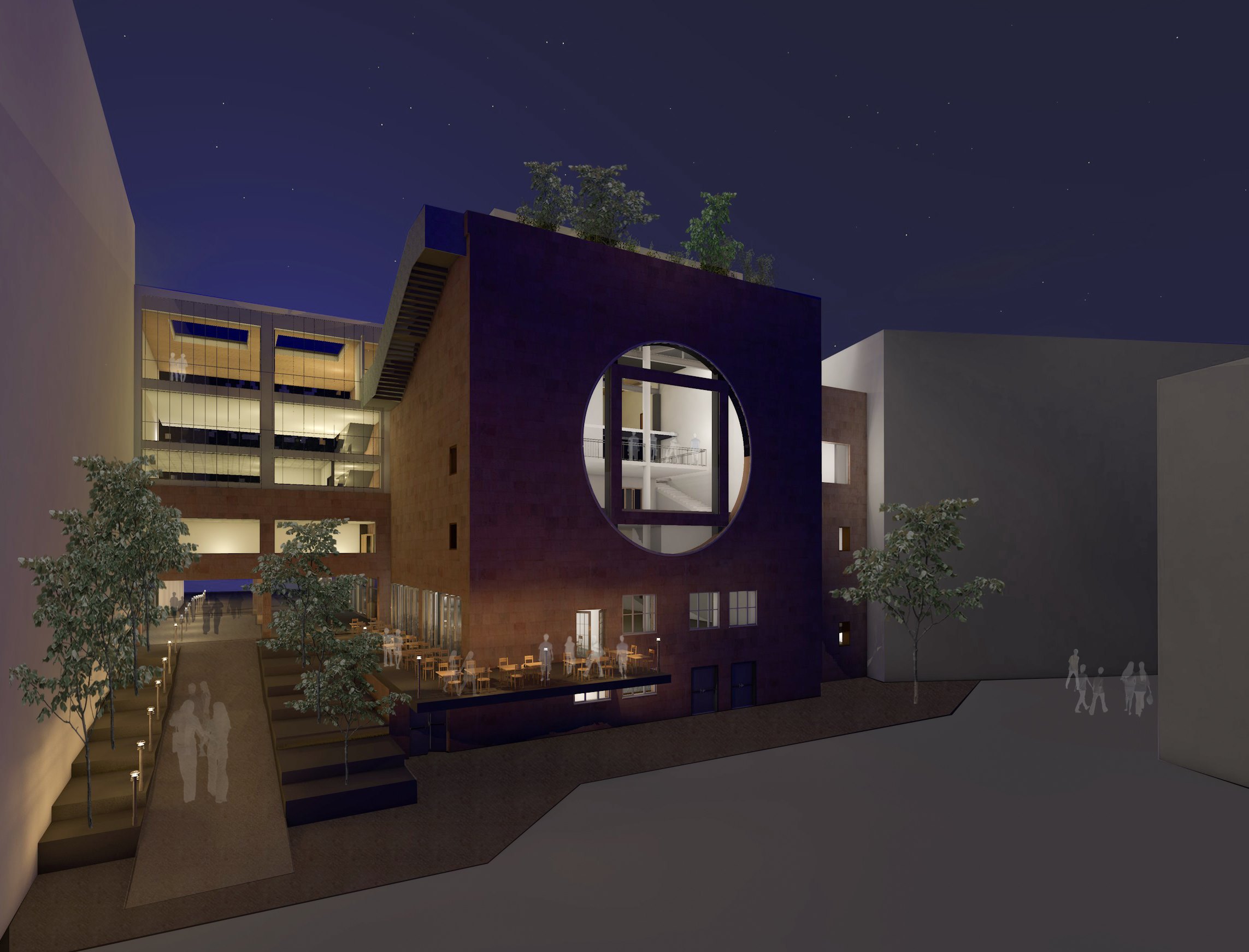
The NPAK proposal engages with the urgent need to reinterpret and reintegrate Armenia’s underutilised Soviet modernist architecture into contemporary life. Positioned at the intersection of cultural memory and future potential, the project treats the existing structure not as a constraint, but as a source of energy and identity.
Rather than introducing superficial gestures of trend-driven design, the intervention is rooted in local context, materials, and use—allowing the existing building to evolve organically. The goal is to create a revitalised cultural institution that is responsive, accessible, and generates new urban dynamics.
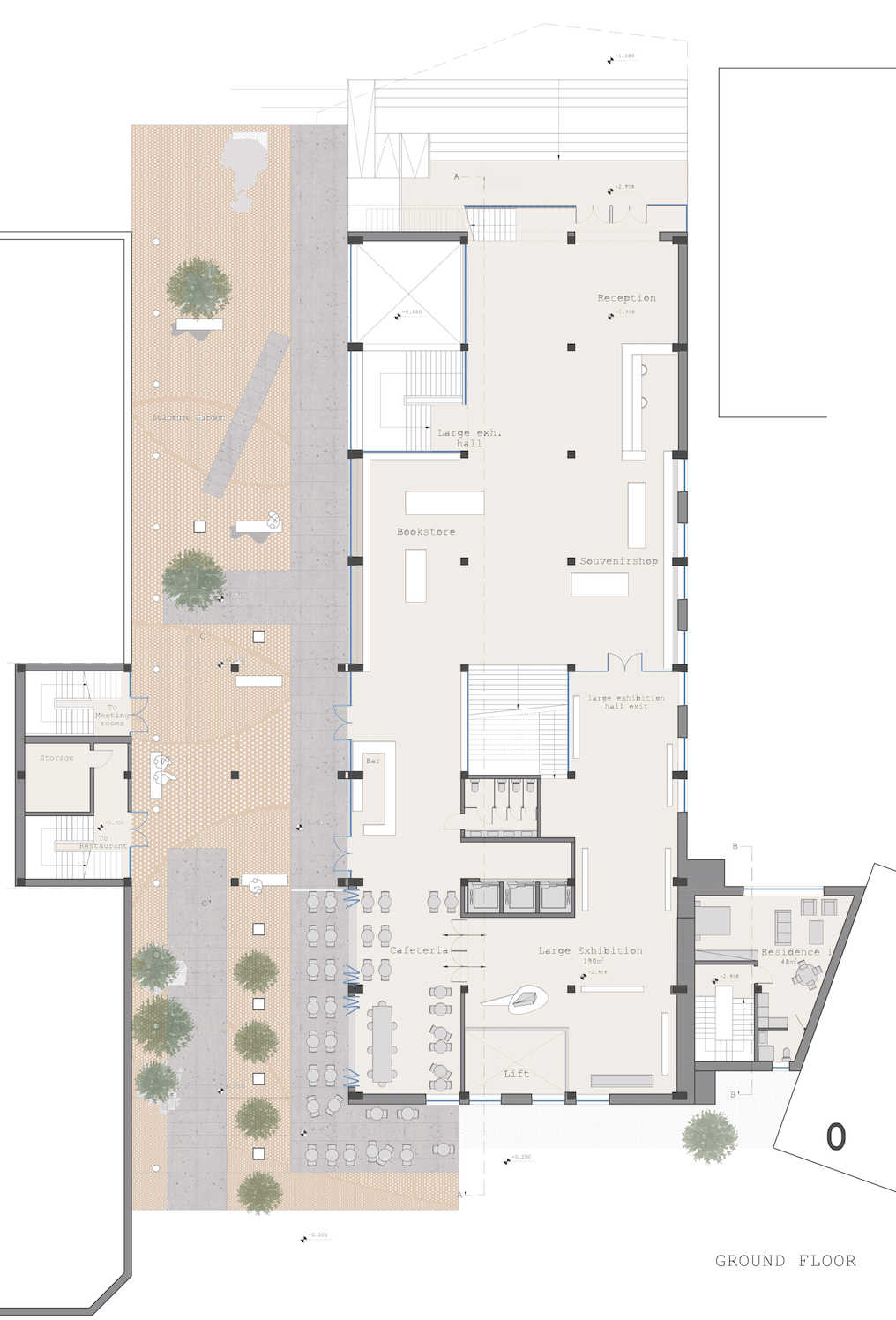
The project is composed of two main volumes: the central building, accessible to the general public (housing the theatre, exhibition spaces, etc.), and the adjacent building, reserved for members, artists, and program participants. Circulation is deliberately fluid, fostering interaction between functions and users.
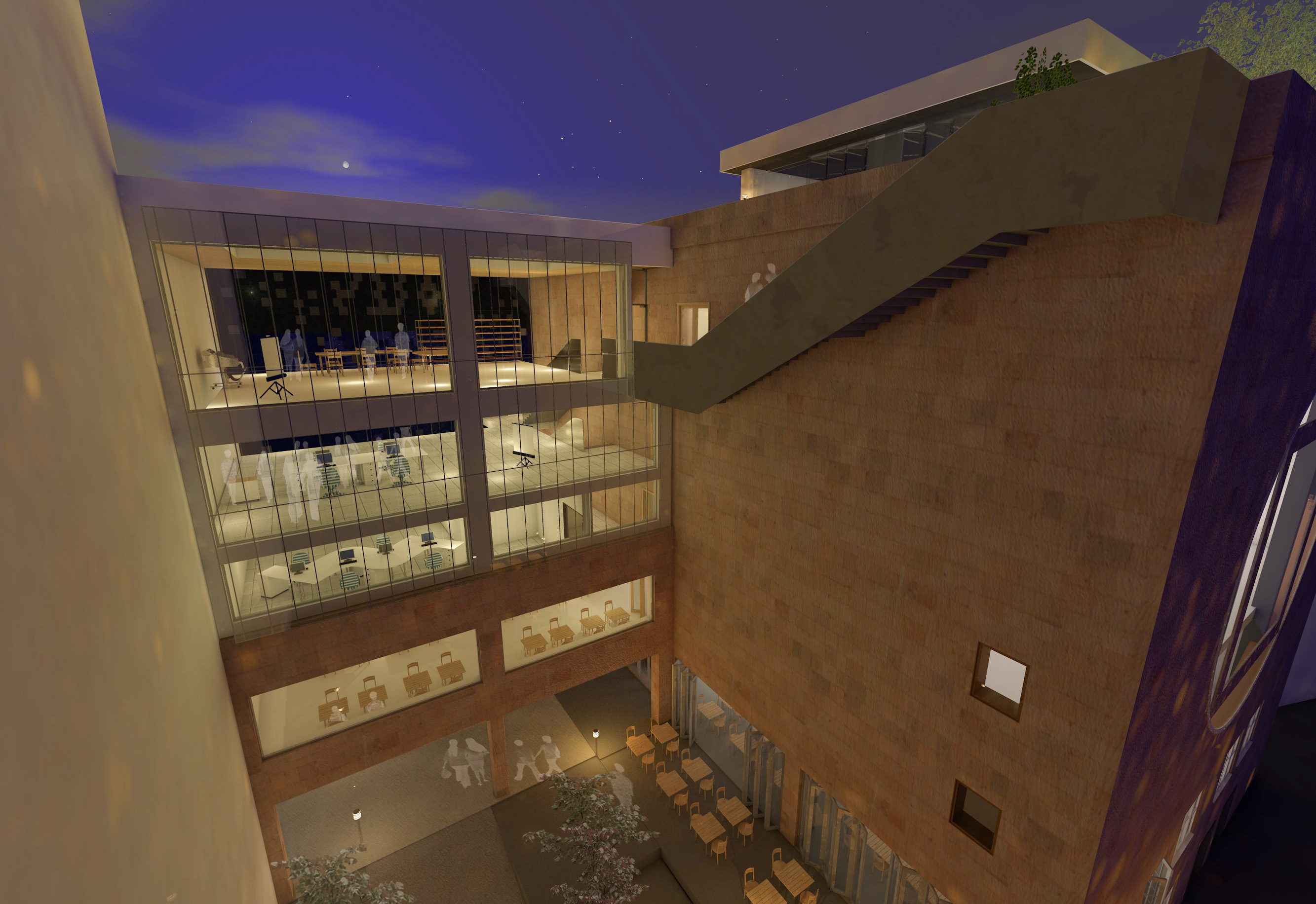
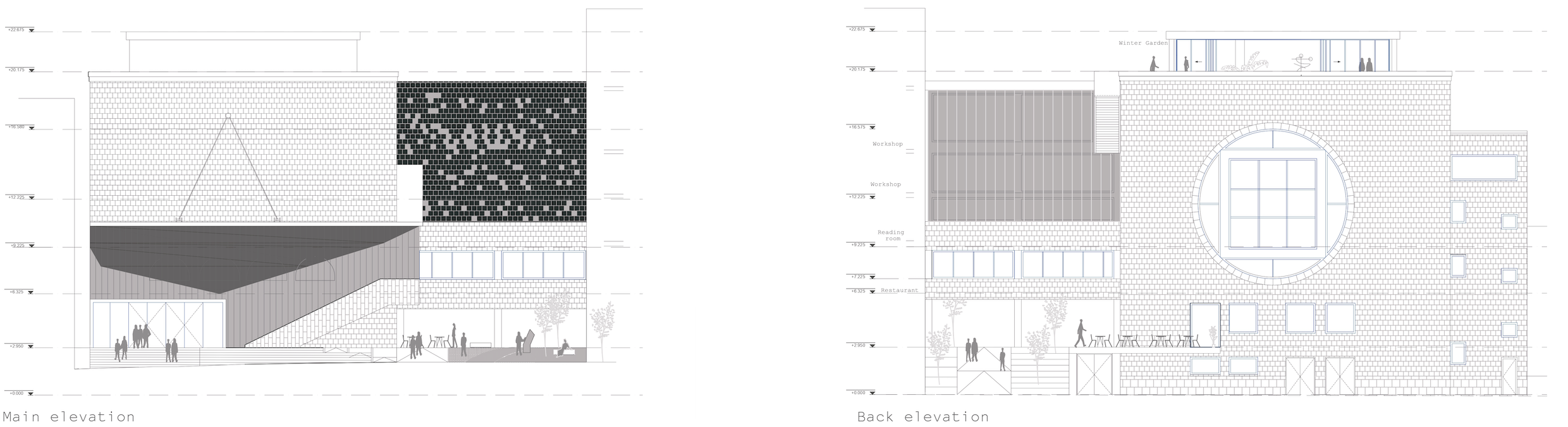
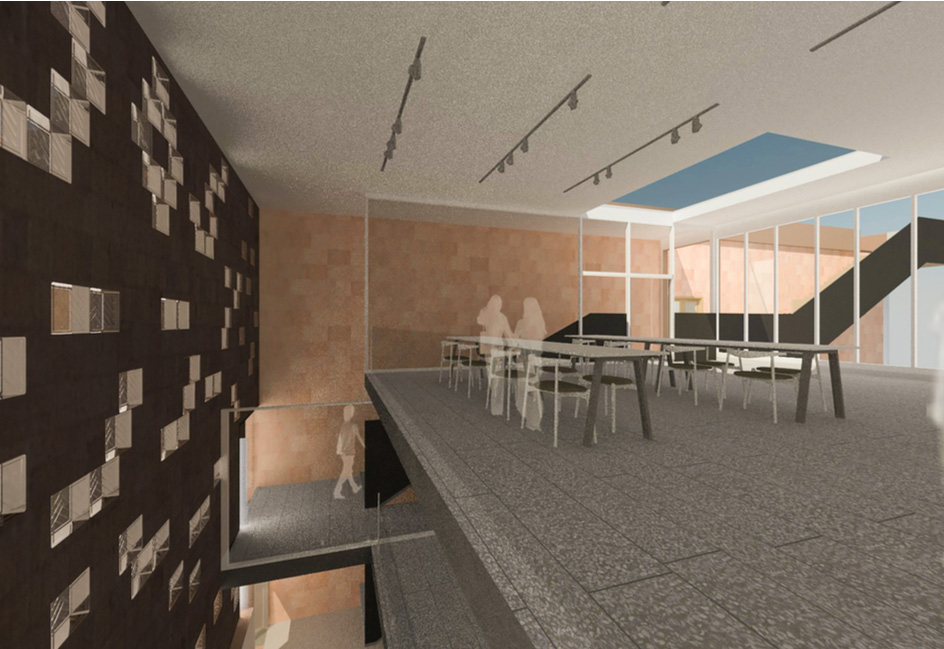
Adaptability is central to the design. Modular and reconfigurable spaces accommodate a variety of programs and support transformation over time. A key architectural gesture—a grafted staircase—threads through the project, connecting indoor and outdoor spaces, and leading to a rooftop terrace and winter garden.
The openness of the building is expressed both physically and visually: the ground floor is permeable to pedestrian flow, and a newly introduced sculpture garden acts as a connective tissue between two areas of the neighbourhood. This garden enables a continuous reading of the building while reinforcing its public character.
The intervention aims to encourage new generations to recognise the cultural and architectural value of this heritage—not as a relic, but as a vital part of Armenia’s evolving urban identity.