Designing a bus stop, particularly in Armenia, is an undertaking that invites us to rethink the concept of public transportation in the country.
The deplorable state of Soviet-era bus stops provides an initial clue for reflection.
These bus stops, conceived even then as small monuments, are now representative of a non-existent public transportation network. Located near virtually deserted towns and villages, they are completely devoid of any function or use, and consequently have truly become monuments: untouchable, inaccessible, left to decay in the exhaustion of their former splendor.
Given the abundance of such stops in Armenia, any idea for a new initiative would be relevant if it addressed a specific need. But what are the current needs? Are they very different from what a traditional bus stop offers? What would a new bus stop offer that one of these existing structures, if renovated and put into service, would not? What would its new dimension be, if it were to have one—a fundamental, contextual dimension, beyond the contemporary challenges of ecology, the environment, and smart design?
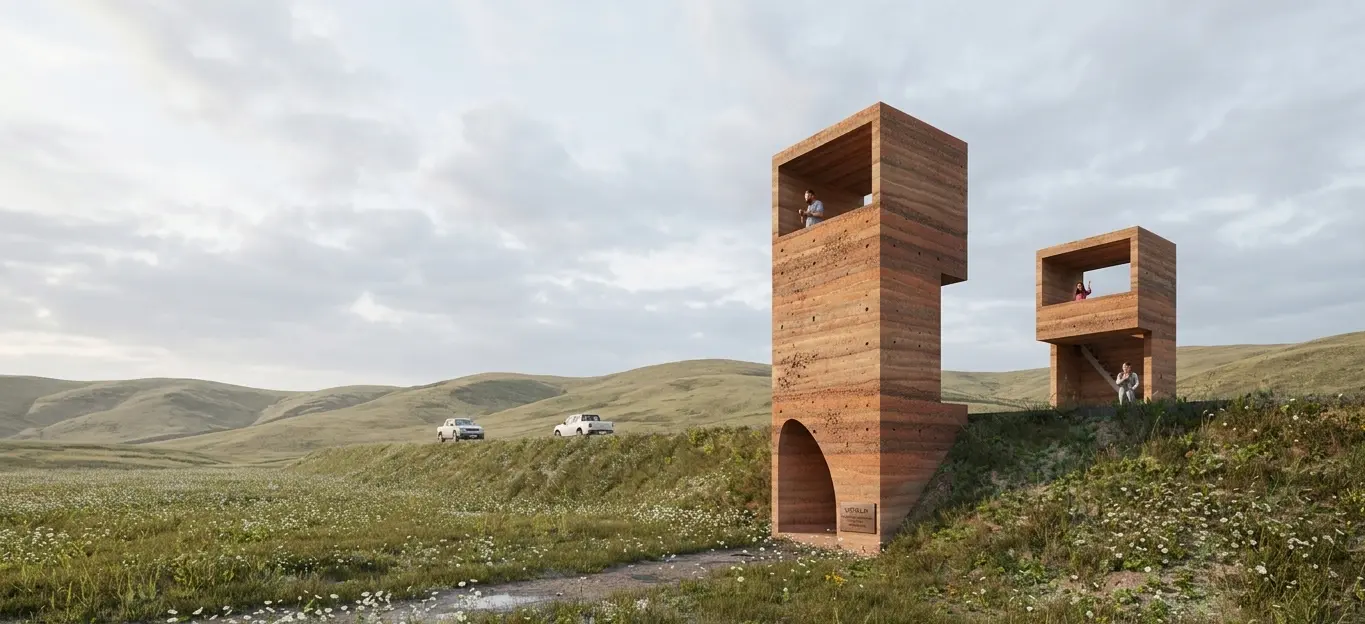
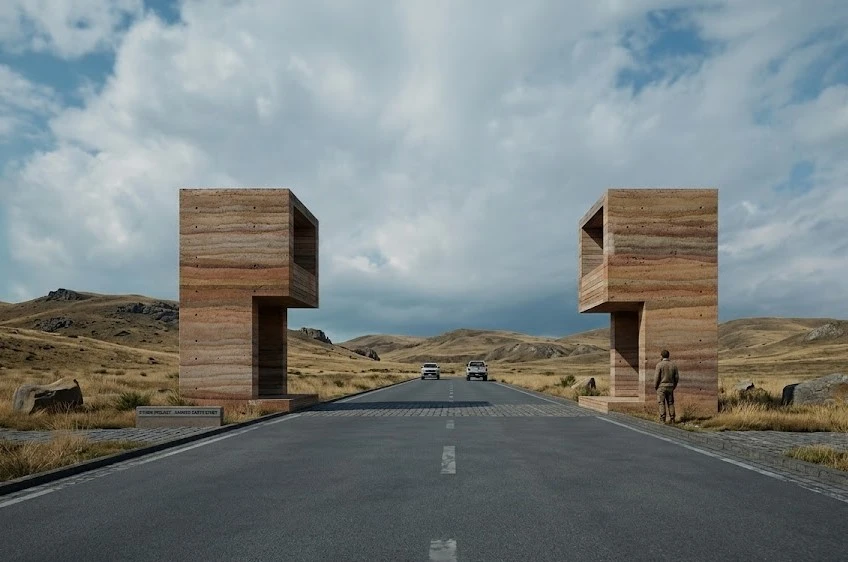
Our proposal is based on the tradition of considering a bus stop as a landmark, an urban beacon in rural landscapes.
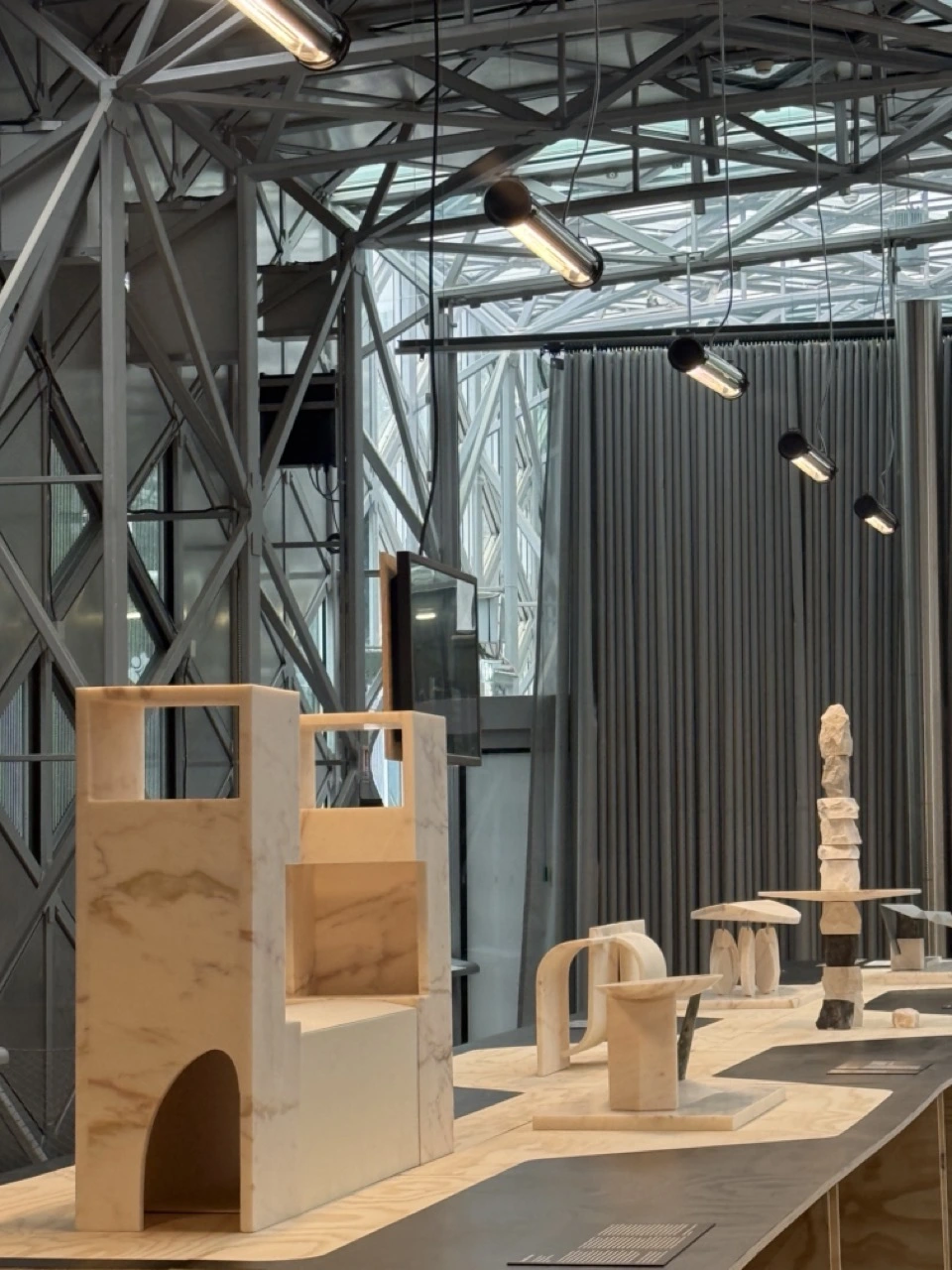
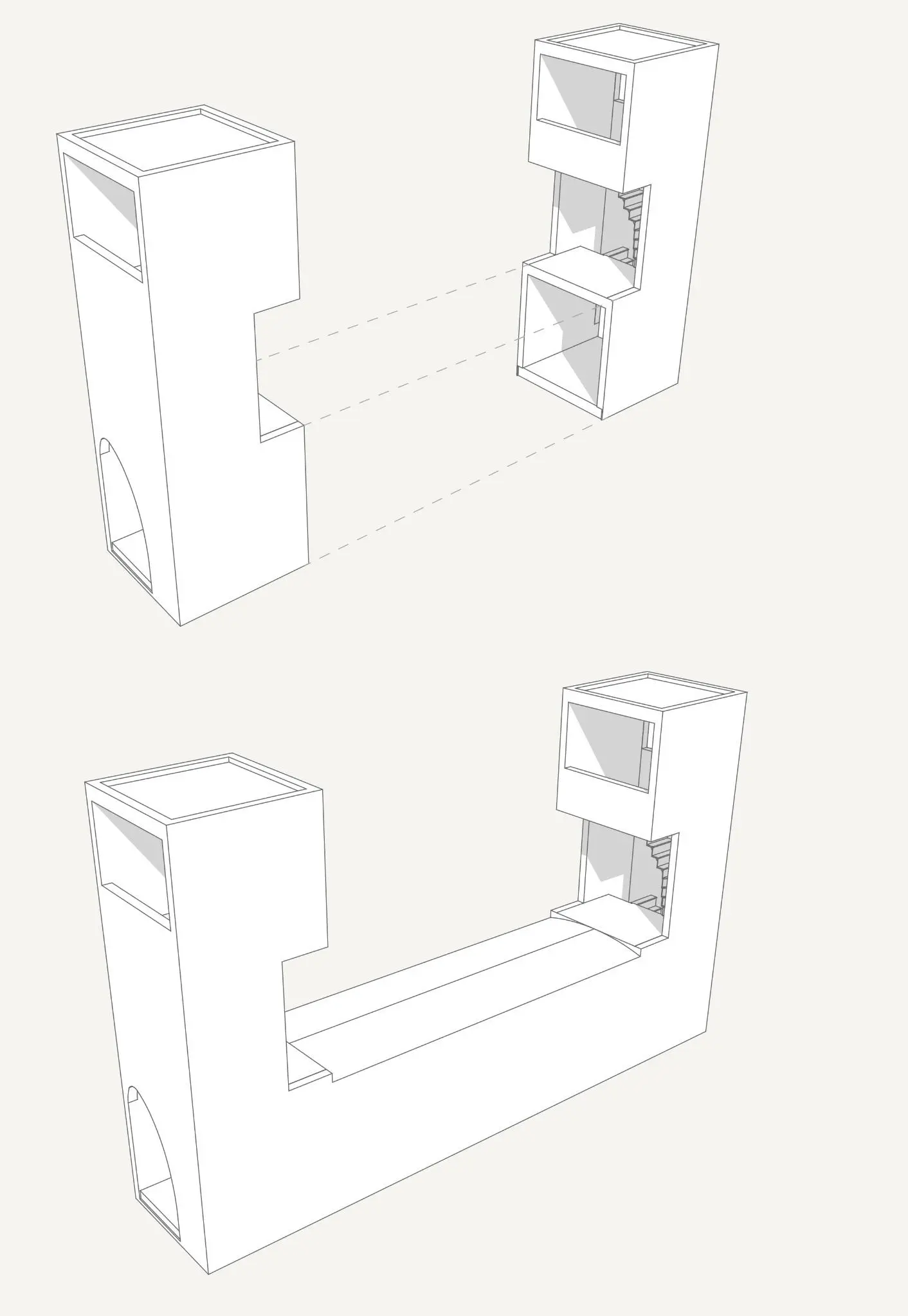
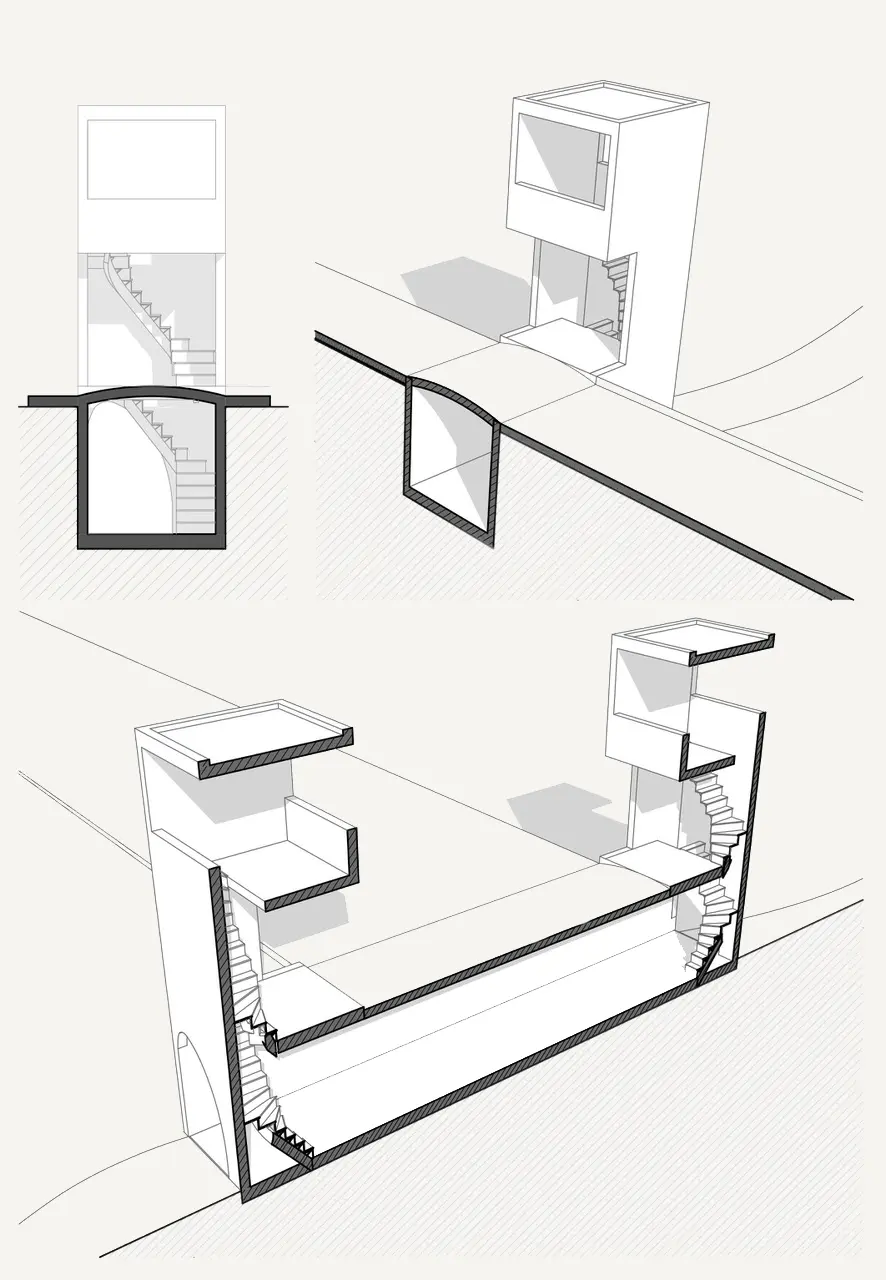
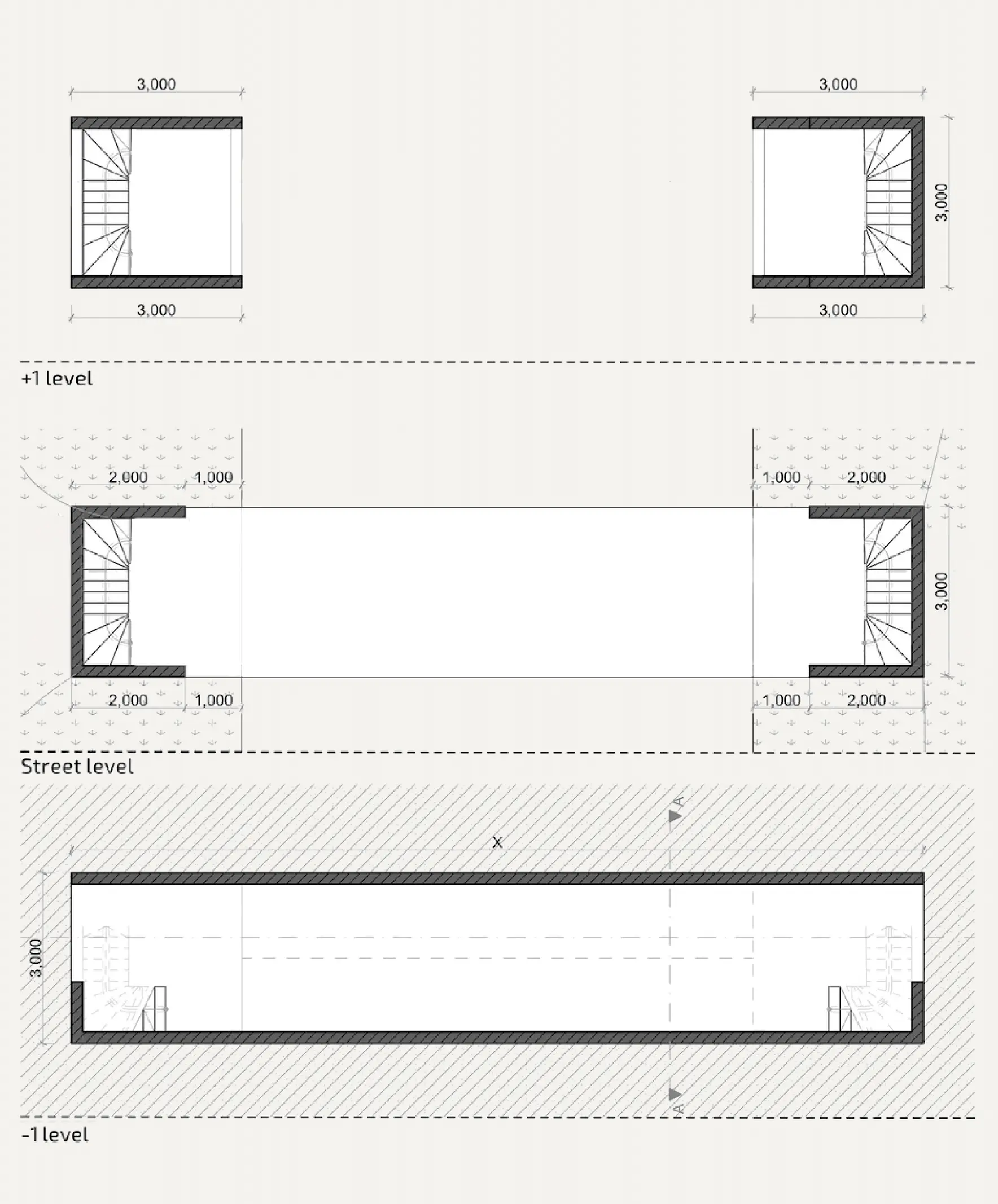
The idea is to design a double bus stop located on either side of the roadway, thus facilitating travel in both directions. These two stops are linked by an underground tunnel, allowing passengers to cross safely, as Armenia's roads are known for their lack of pedestrian bridges.
This is a rammed earth construction, composed almost entirely of the excavated material resulting from the underpass excavation. The construction will be carried out by local workers, given the ease of execution of the building system. This will give it a local character, both in terms of the workforce and the architecture, as well as the materials used.
The stop is on two levels, offering travelers a panoramic view of the landscape and the road. The connecting underpass will also protect travelers from the heat, thanks to the natural materials used, as well as from rain and snow.
Depending on the location, the earth will give the building a particular color. Depending on the context and orientation, the stop may undergo necessary adaptations in terms of views, openings, etc.